How TAMBUM came about
2026-08-02 · Daniel Vishnya
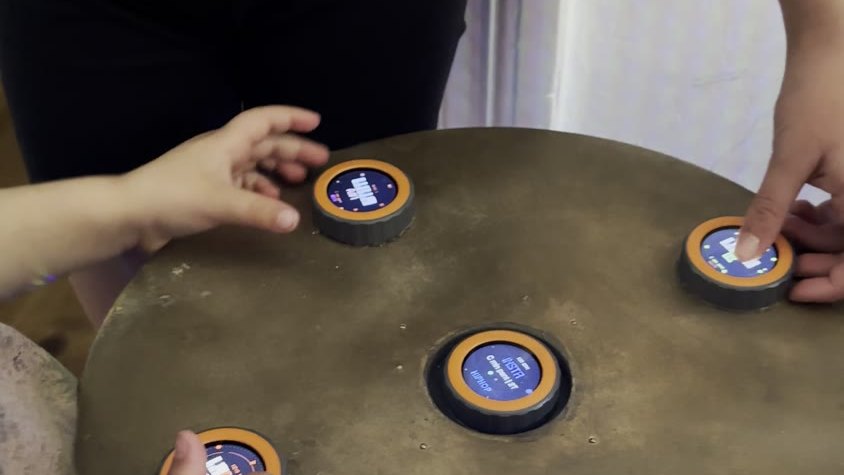
One question, two workshop series at the Manege youth club in Neukölln and more than 20 children: from a first cardboard machine with arcade buttons to a prototype that really sounded.
It started with a question nobody had a good answer to:
Why is there no music device for children and teenagers that invites them to play together — and makes music-making fun and approachable at the same time?
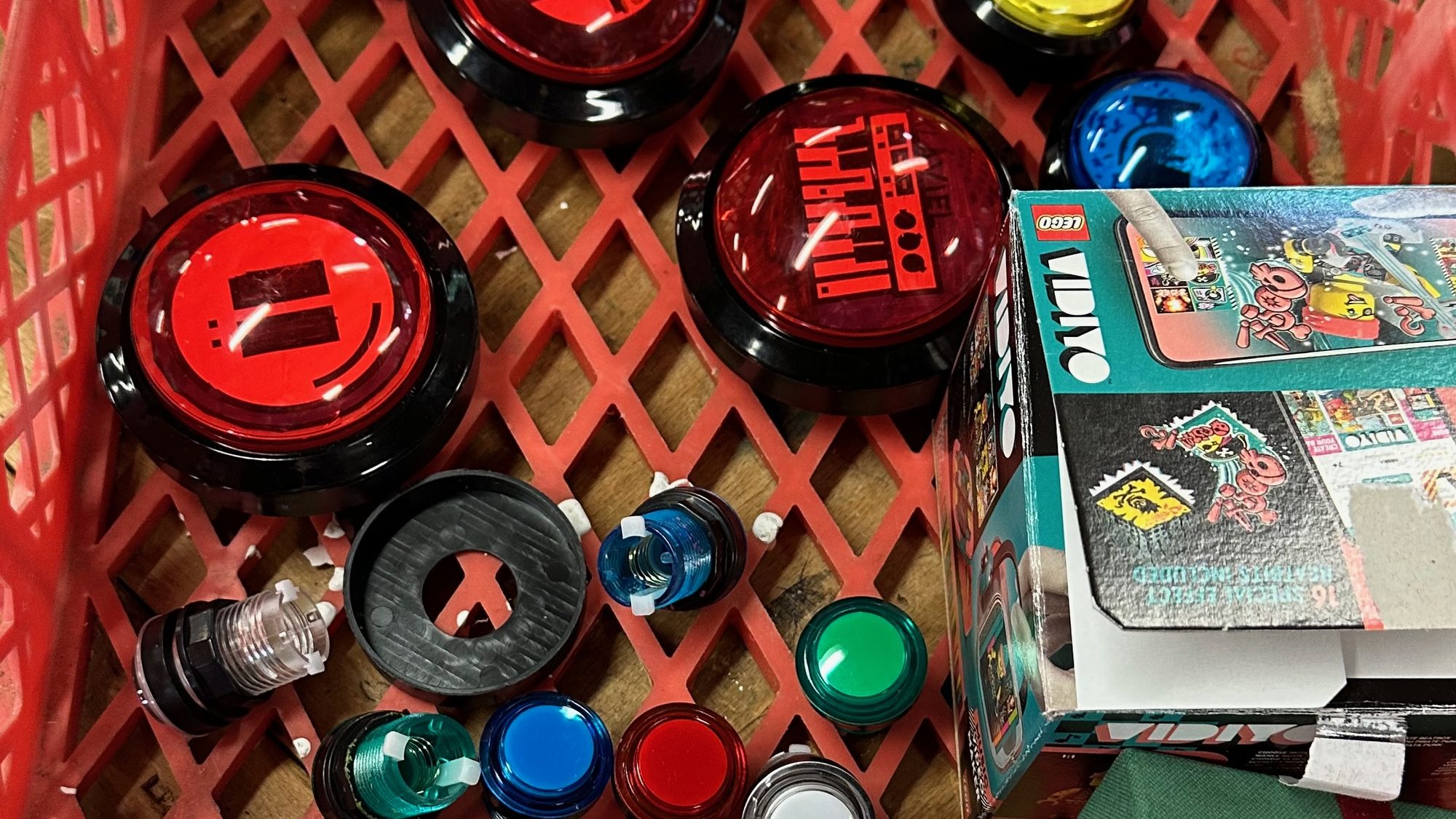
2024: the first workshop series
In the “Rhythm Hacker” project, funded by the Bezirksjugendring Neukölln, we ran a first series at the Manege youth club in Berlin-Neukölln. The participants did not copy something; they designed it themselves:
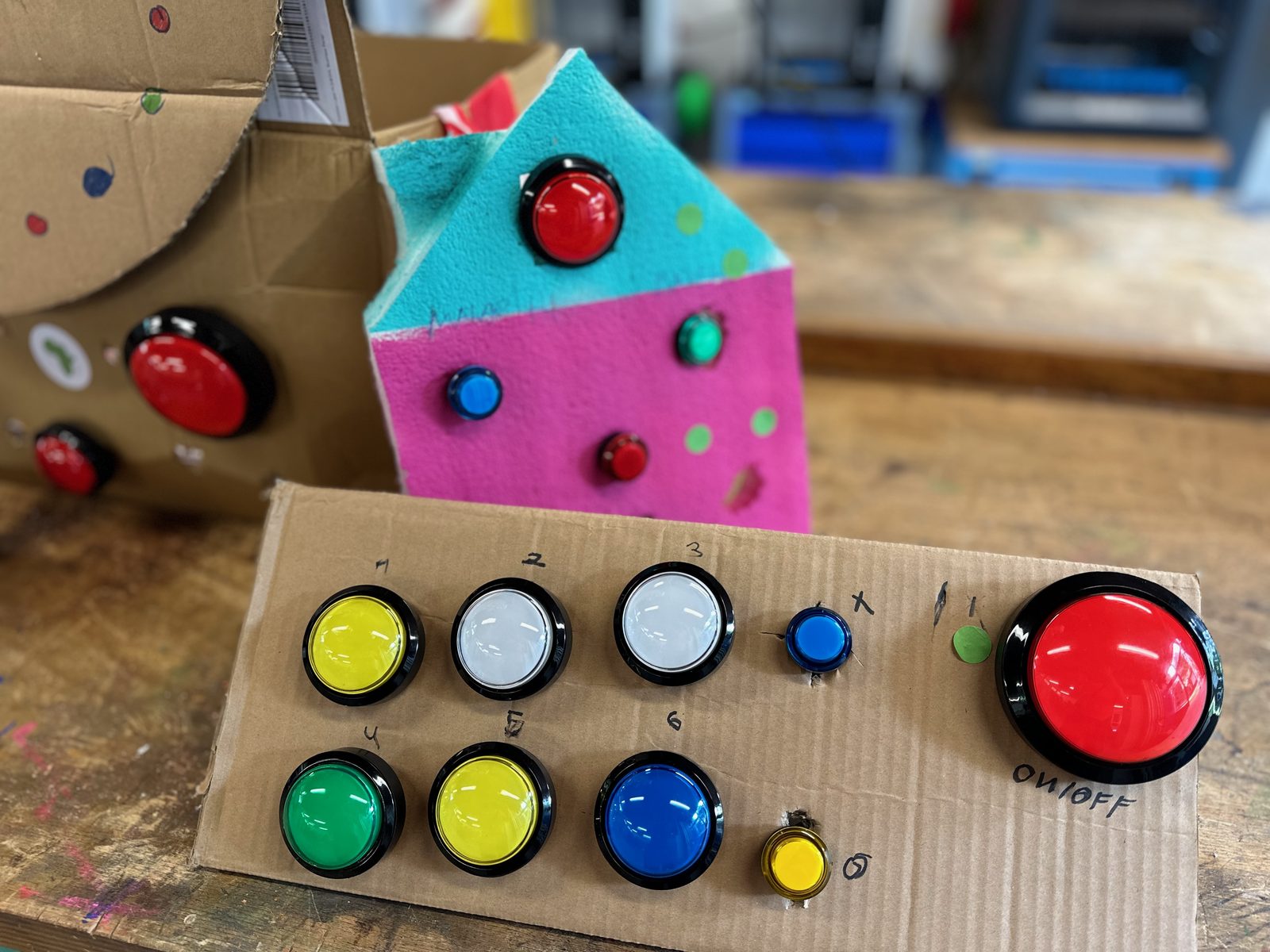
- They sketched their own interfaces on paper and built them from cardboard and craft materials
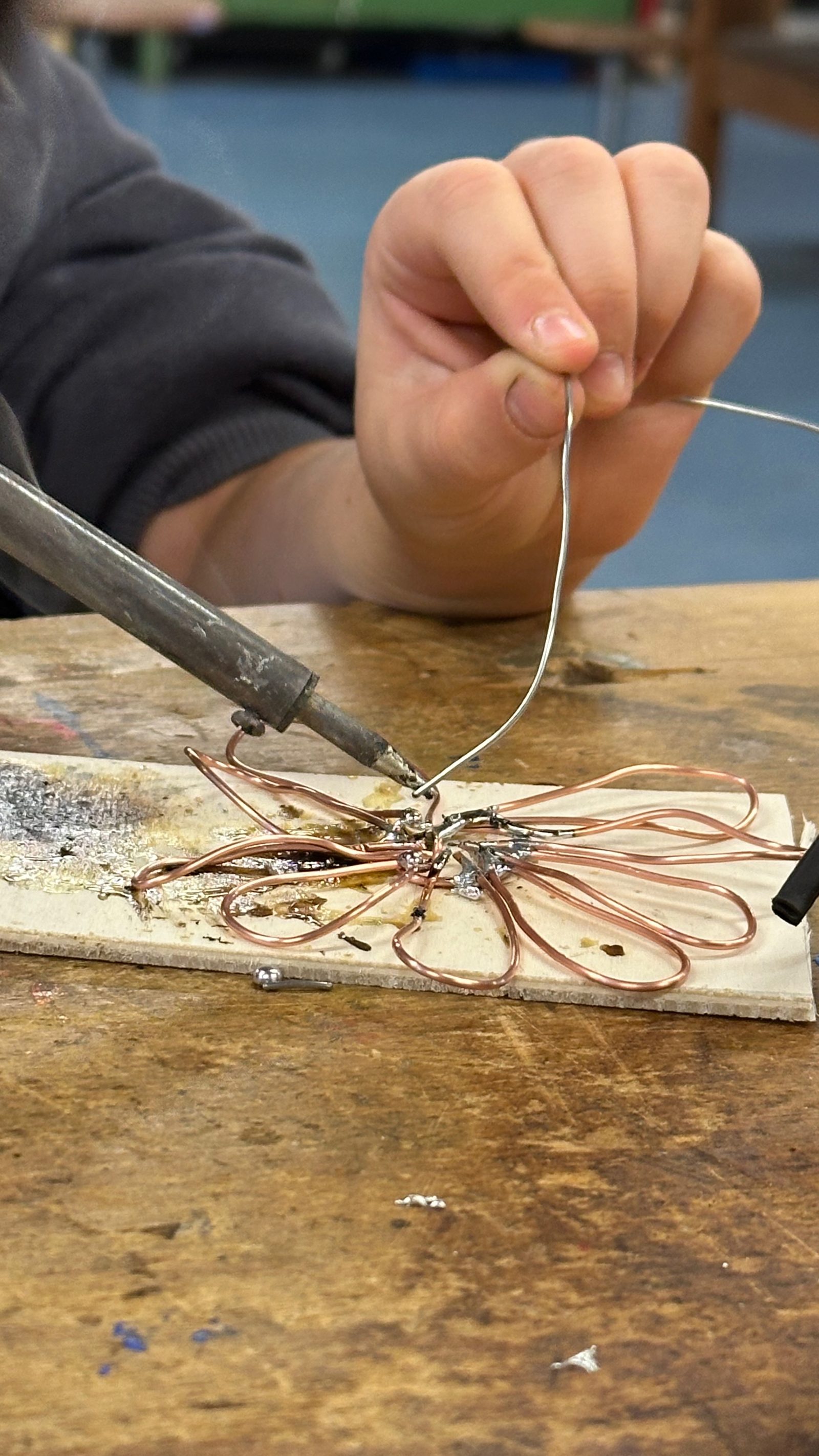
- They experimented with piezos and turned them into their first sound devices
- They made custom buttons to control their beats
- And they built the first prototype of the beat machine
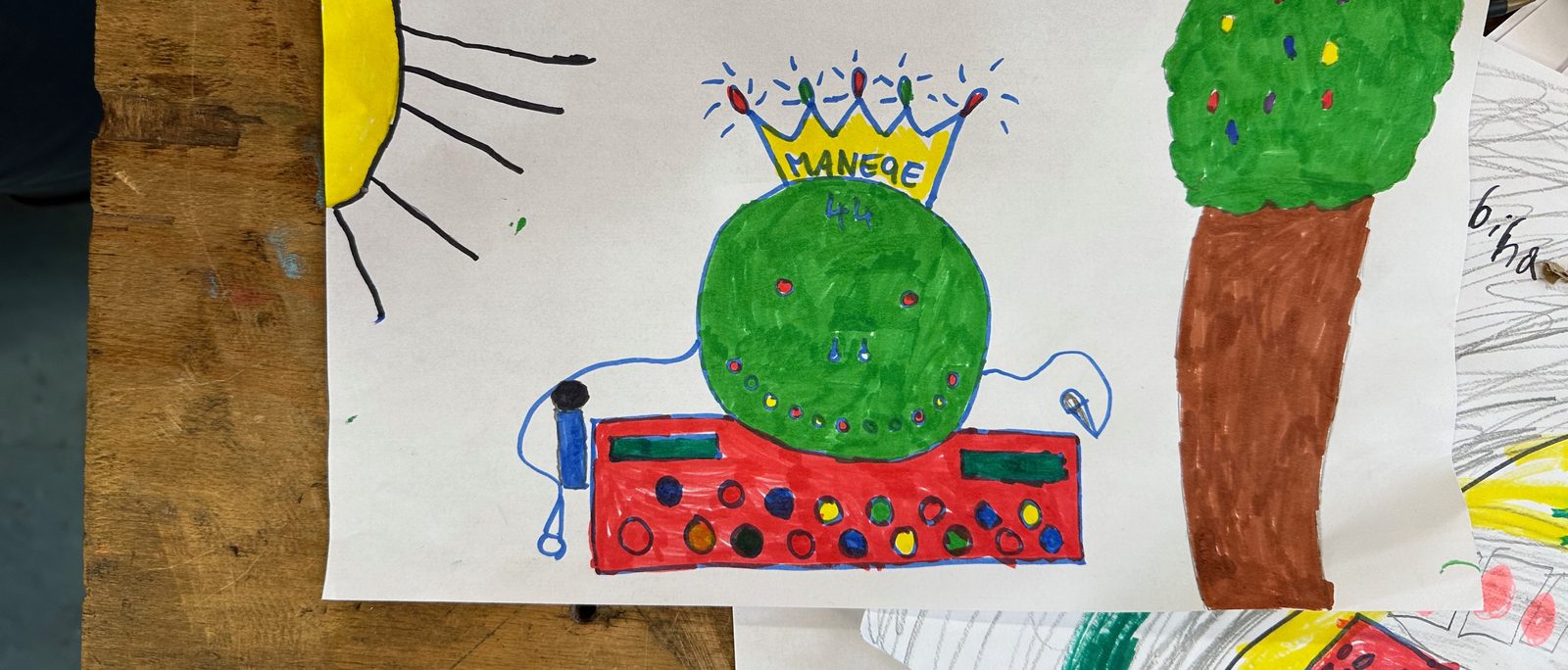
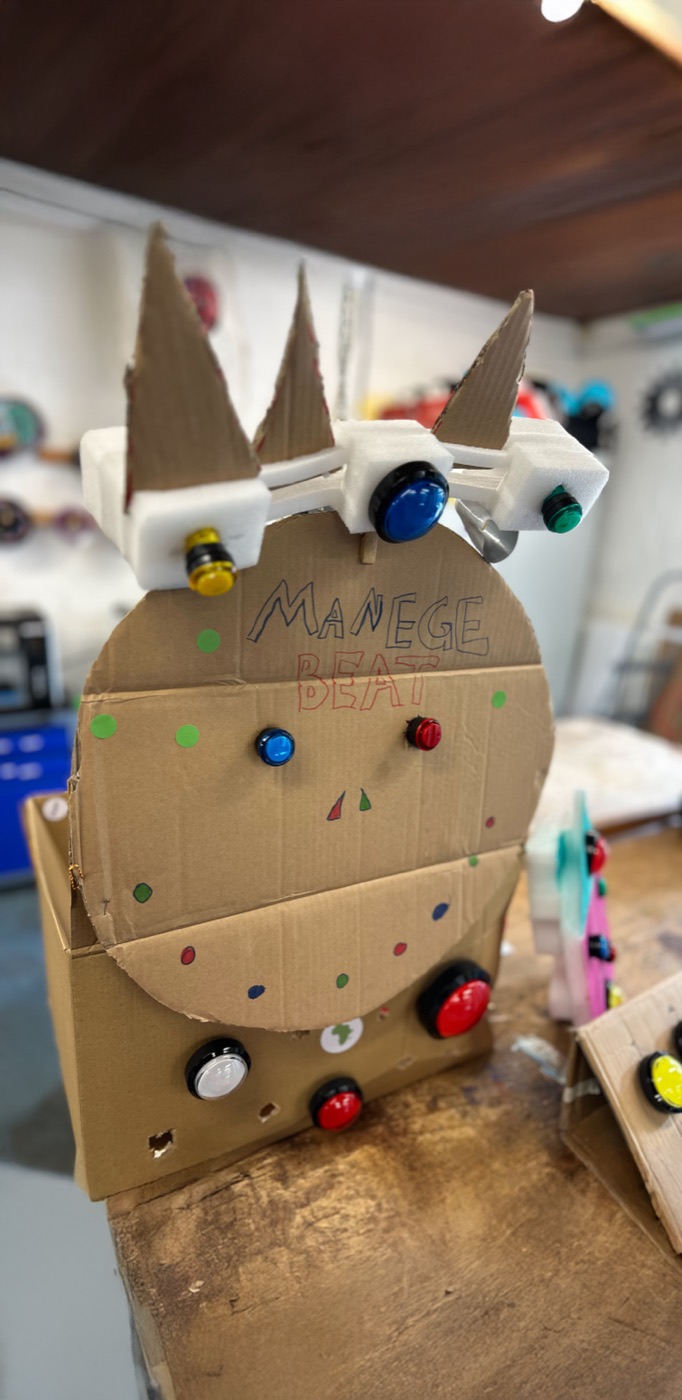
Cardboard, felt pen and arcade buttons: “MANEGE BEAT”, the first device. It looks like a toy and was a complete design — every button had a job the children had thought up themselves.
The film shows the workshop in progress: one afternoon in the workshop, filmed as it was — with all the searching, waiting and trying out that goes with it.
More than 20 children and young adults took part in that pilot series. The responses from the youth club, from partner institutions and from other artists were consistently positive — and new collaborations came out of it.
Underneath: soldering, wiring, programming
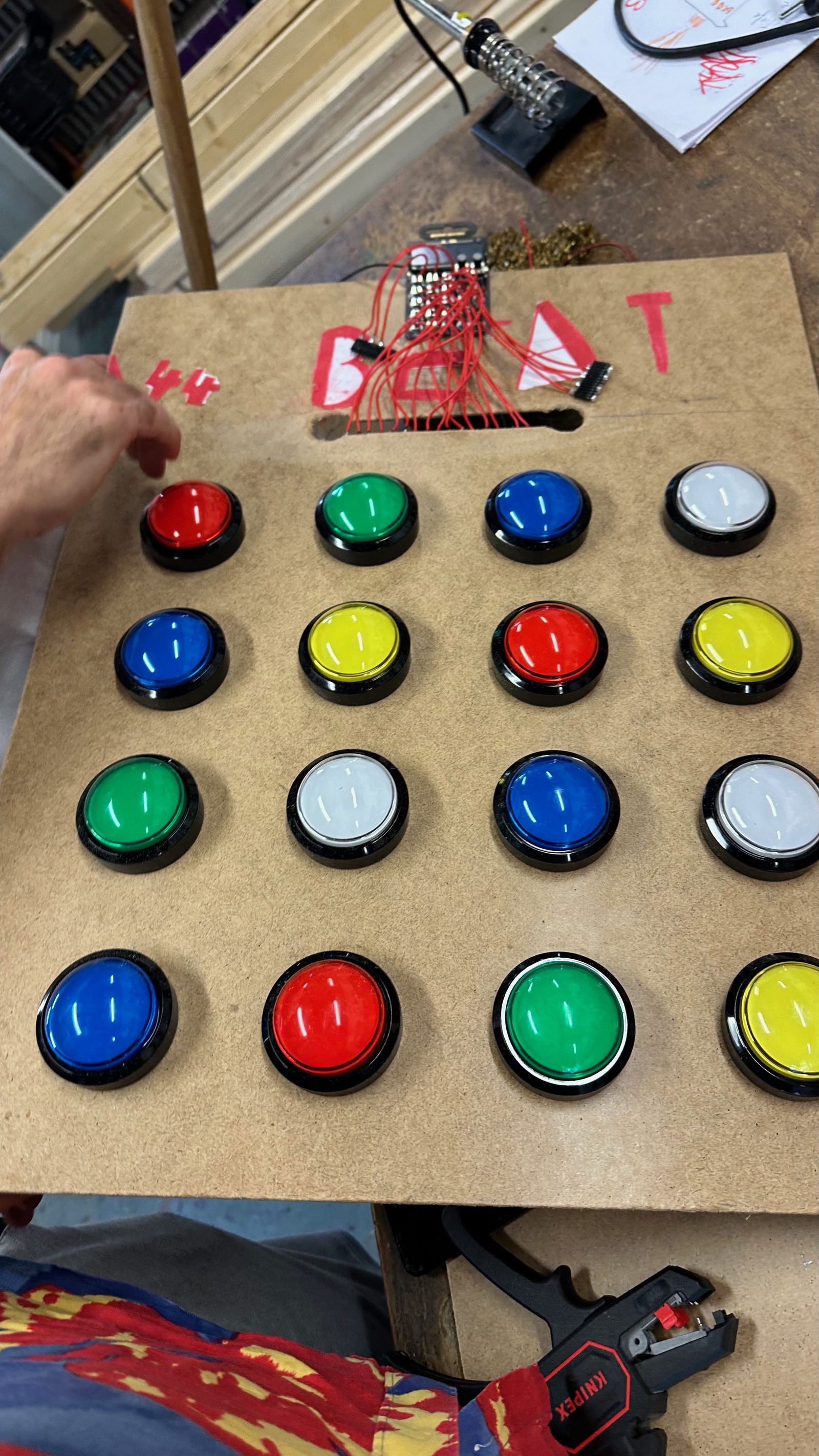
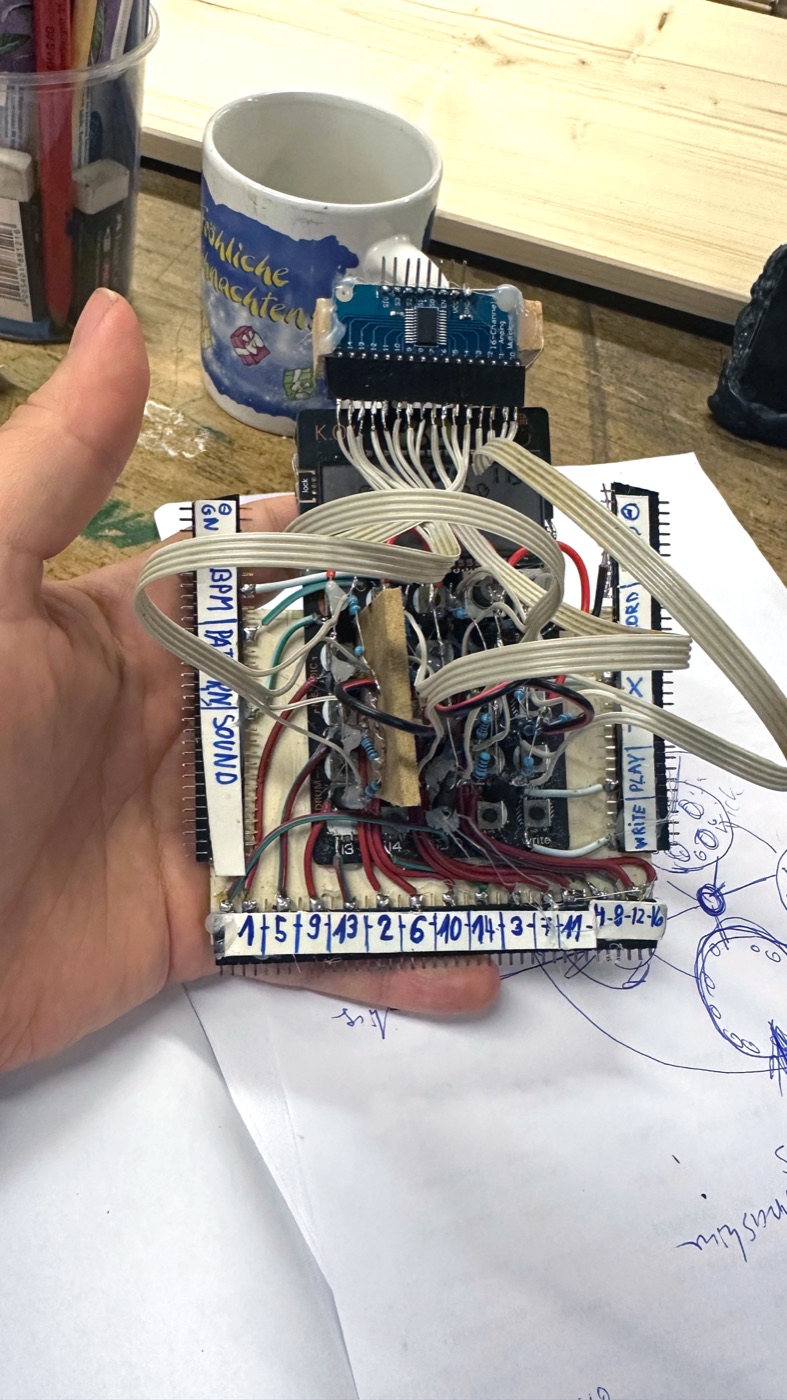
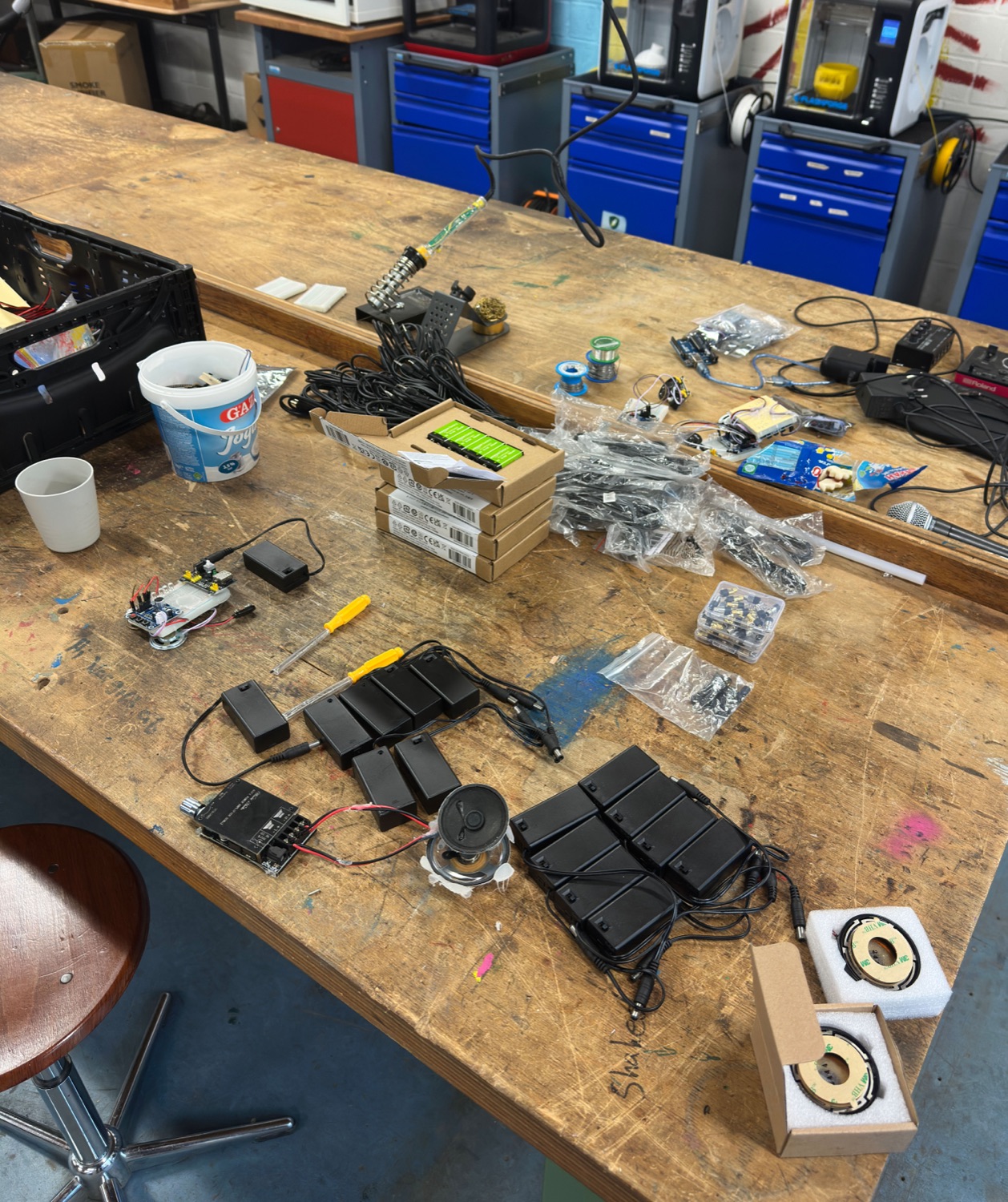
Under the cardboard sits real electronics: a Pocket Operator by Teenage Engineering — a bare circuit board with no casing — its key contacts led out and wired to home-made buttons a child can actually hit — labelled in ballpoint pen, because labelling is as much part of building as the soldering.
Beat Machine 2.0
In the second phase the cardboard model became a solid device: the Beat Machine 2.0, with a round housing and custom-built RGB buttons. It is the same machine as before, just built further — the Pocket Operator remains its sound engine, and everything is solved purely electrically, without a single line of code.
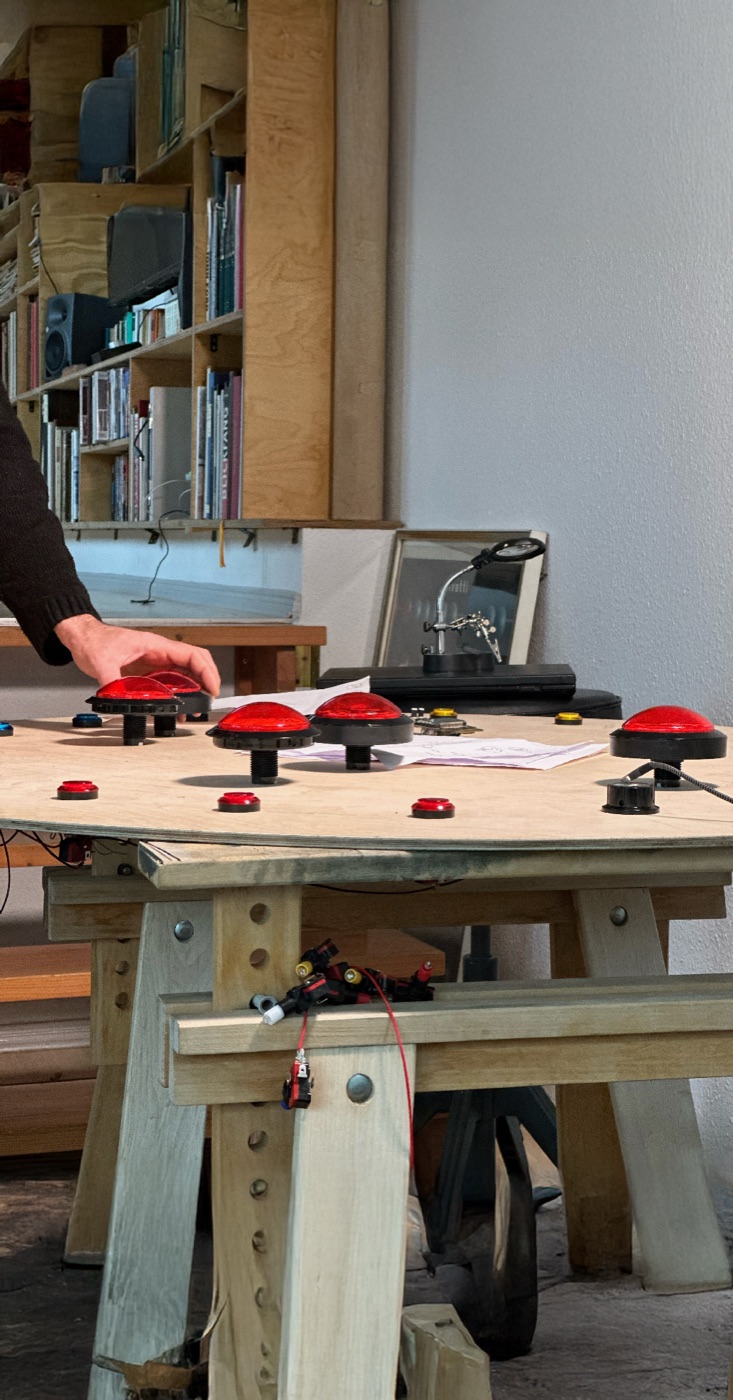
On the list for further development: a built-in mixer for guitars and microphones, teaching material for different skill levels, a sturdy transport case, a clear colour-coding system, plus speakers and a battery for standalone use.
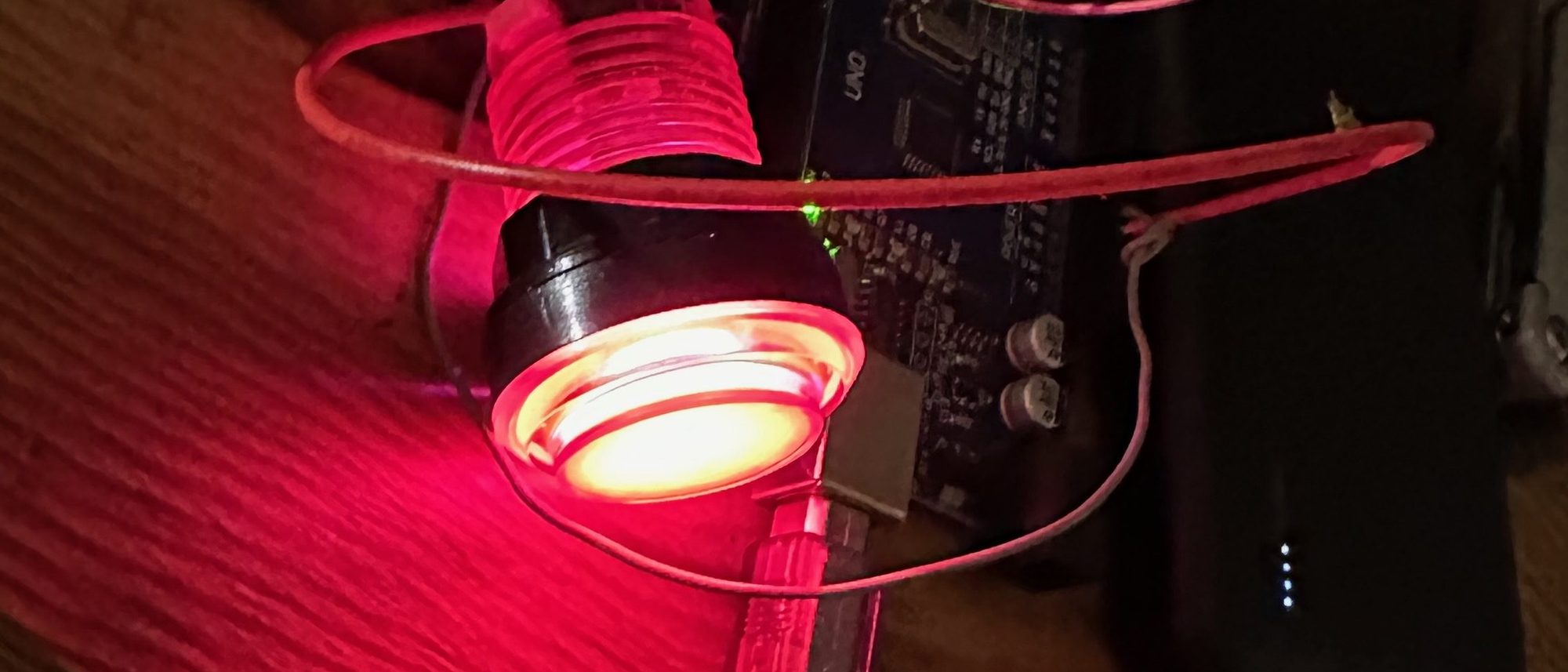
Four colours, four places
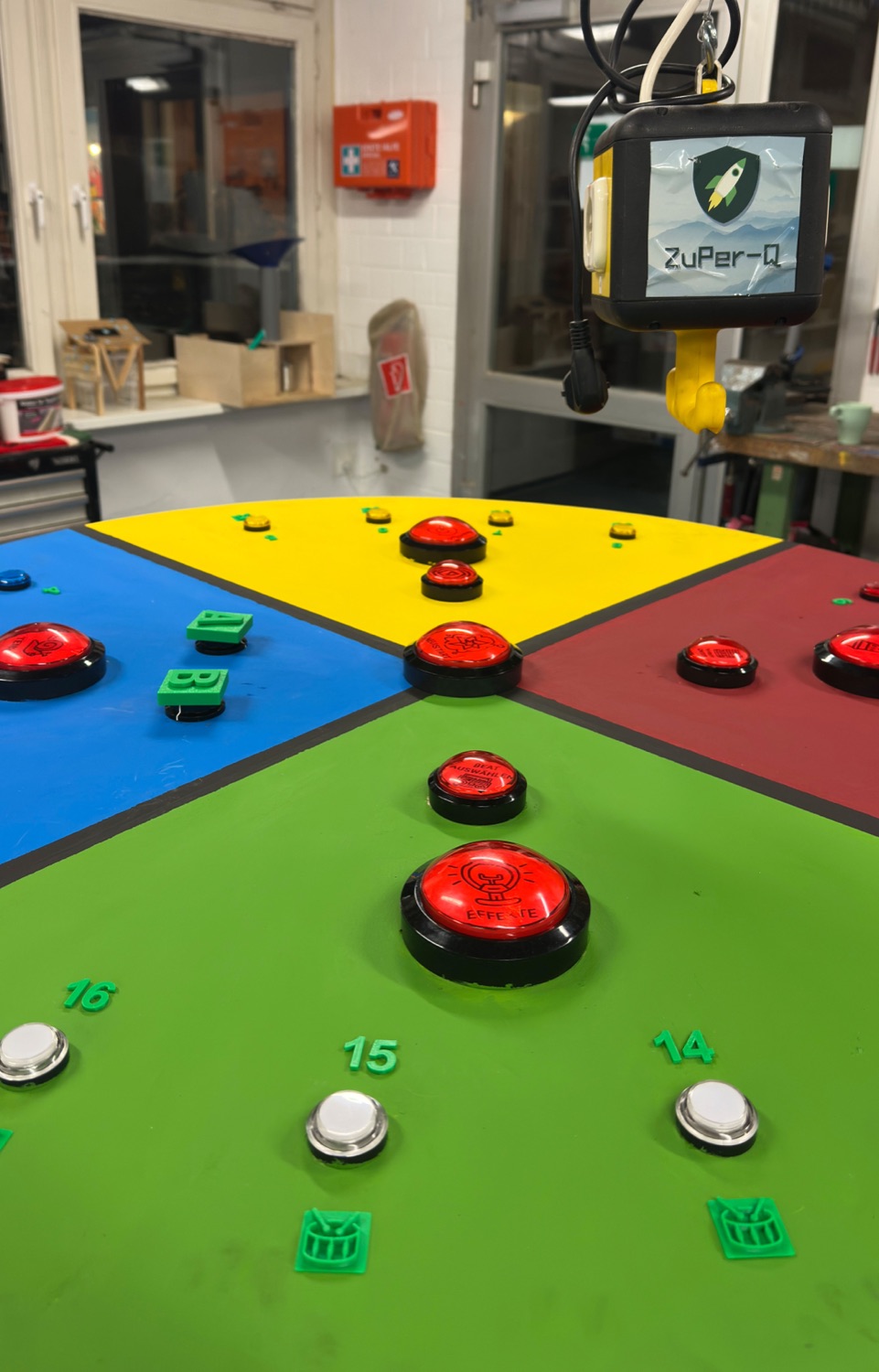
You can already see the idea here: the table is divided into four quarters, each with its colour and its buttons. Nobody has to be told where their place is — the colour says it. And because the table is round, there is no head and no better seat.
What became visible
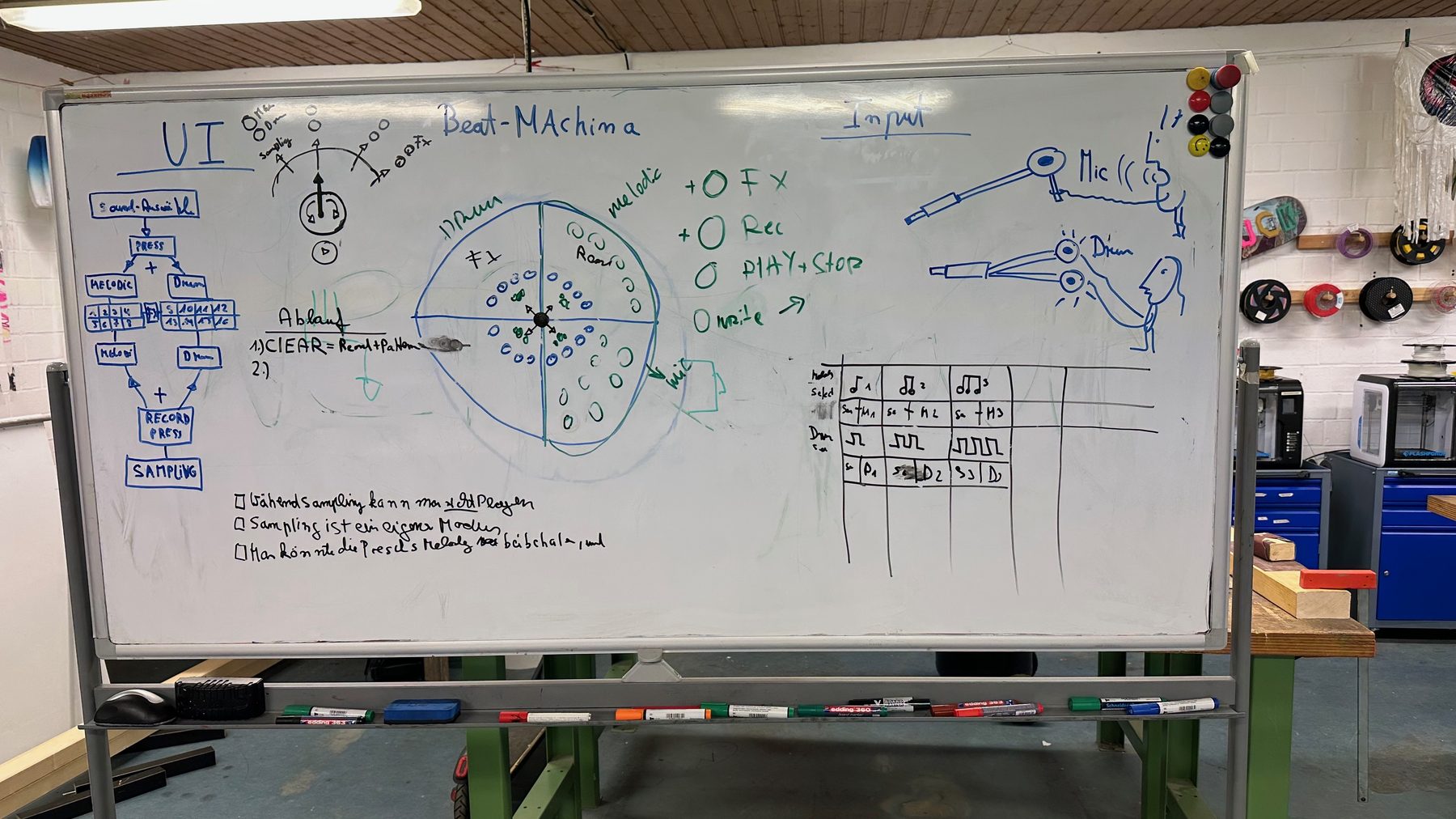
Two observations from those afternoons shaped everything that followed.
First: children under eight press everywhere. Every press has to produce sound — and never open a menu.
Second: the moment a tool demands reading, half the group drops out. Not because they do not want to, but because they cannot read the word, or do not know the language.
What comes next
Bezirksjugendring Neukölln is funding ten more workshop days at the Manege Neukölln youth club — it has carried the project since the very first workshop. After that the series is meant to travel: schools, youth centres and public spaces in other cities, with the focus on creativity rather than technical skill.
TAMBUM grows out of this
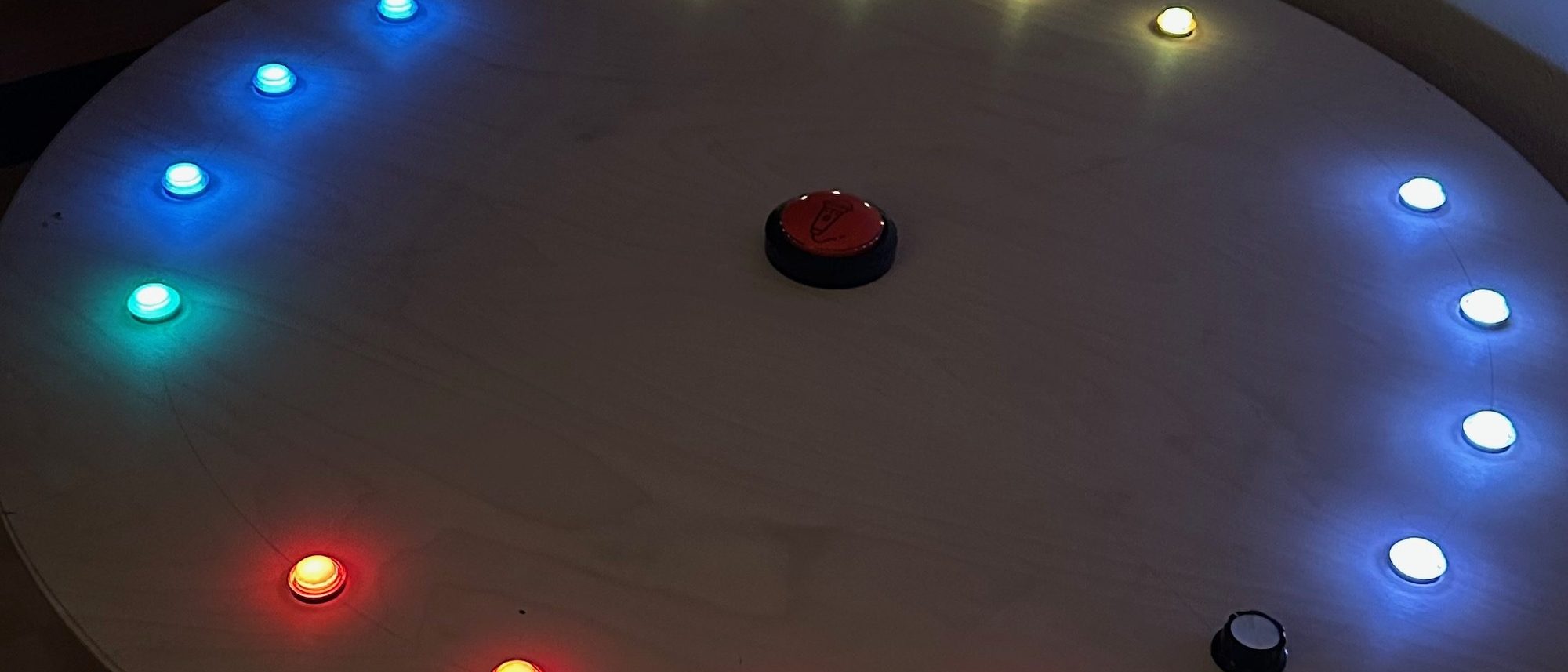
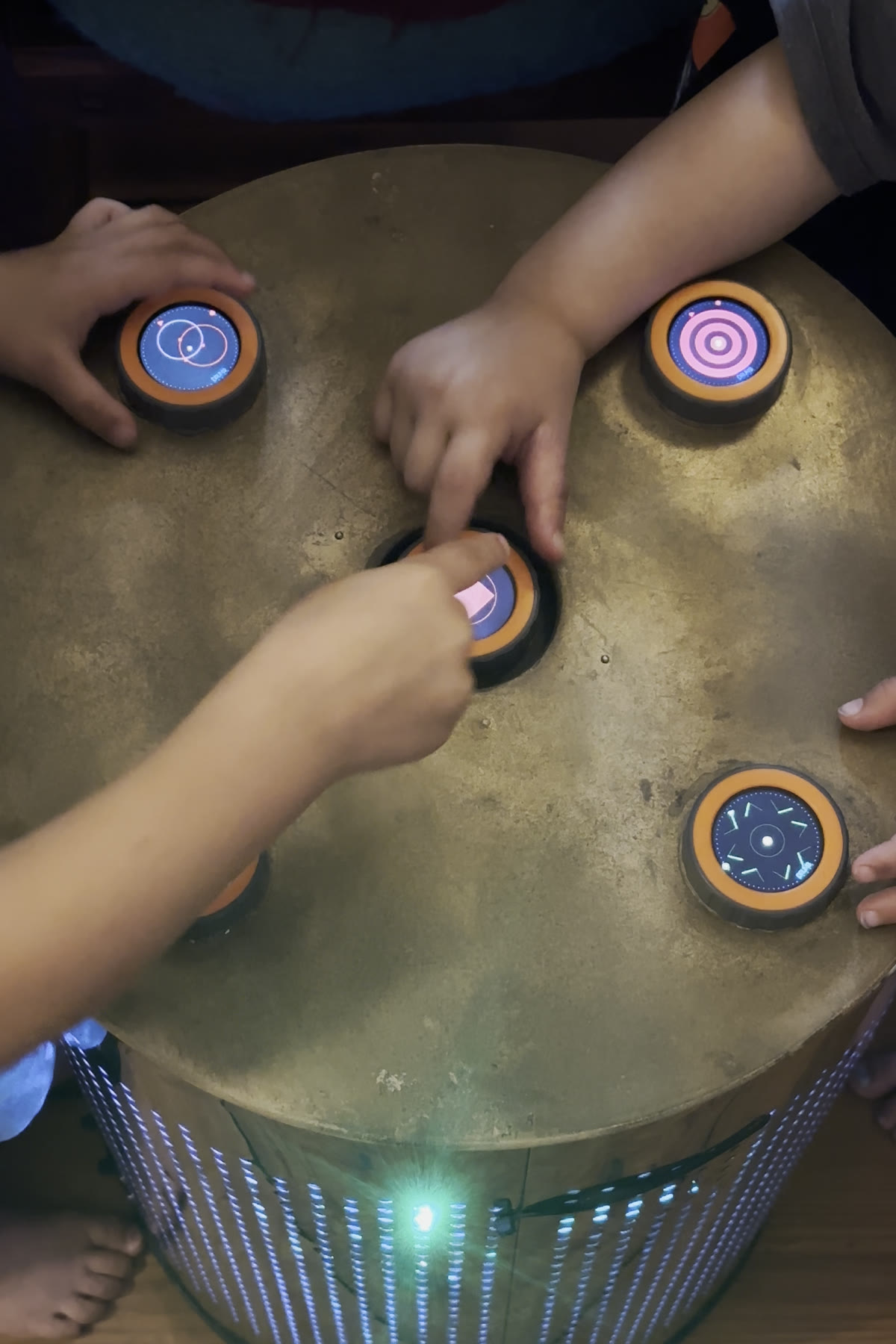
TAMBUM answers both observations: five round knobs on a round table. Four of them are voices — bass, chords, pads, melody — and the one in the middle leads, holding tempo, key and genre together for everyone.
Everything there is to choose lies on rings. Keep turning and you always arrive again. There is no place to get lost in.
You can try it on the home page — the table is rebuilt there in the browser, with the same sounds that come out of the speakers on the real instrument.
Read on
-
 Why TAMBUM has only six menus
Two years of workshops, a hacked sampler and fifteen children who all wanted to press at once. What came out of it was not a better machine — it was a rule.
2026-08-30 · History · Daniel Vishnya BeatmachineConstraint DesignWerkstattManegeBezirksjugendring